
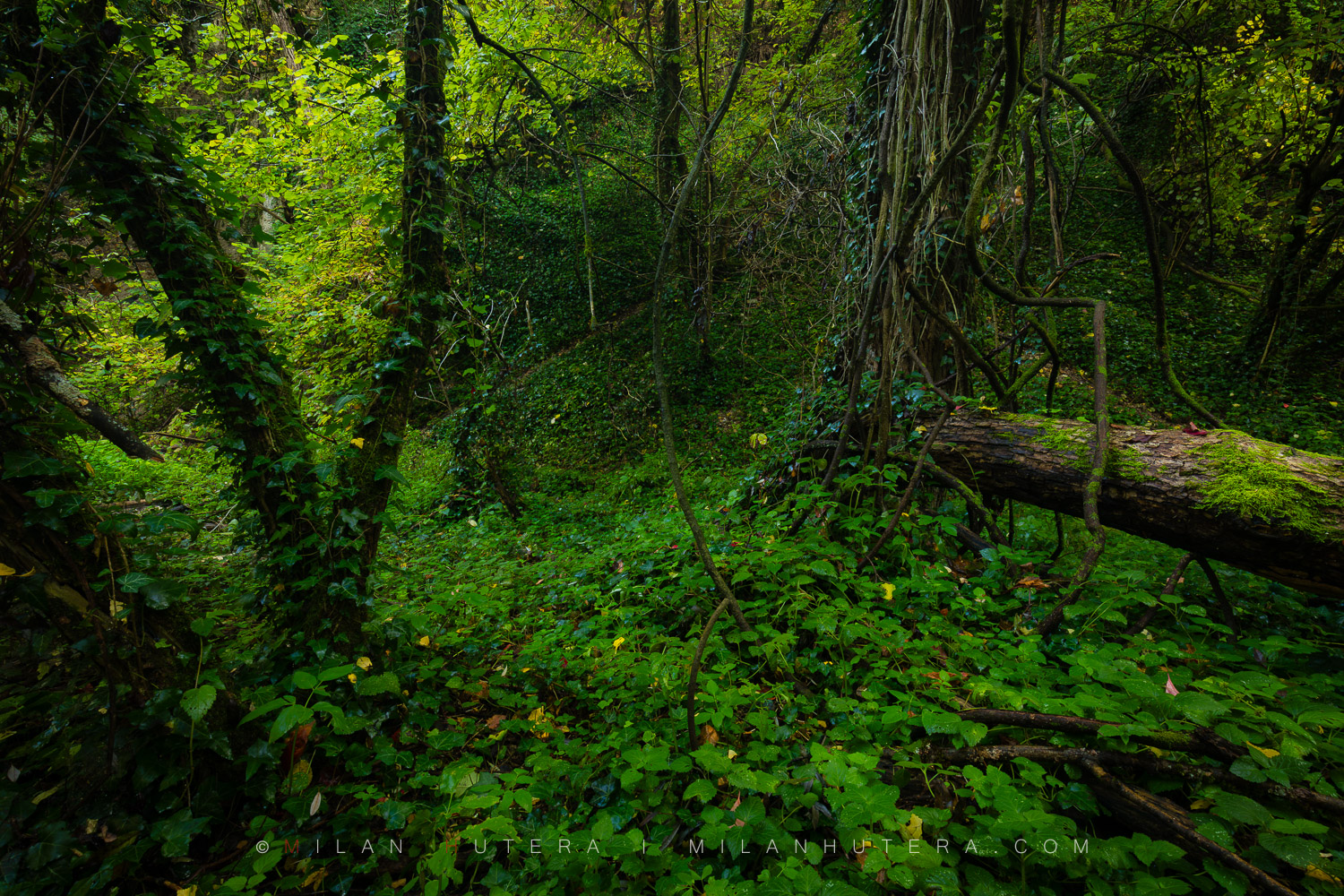
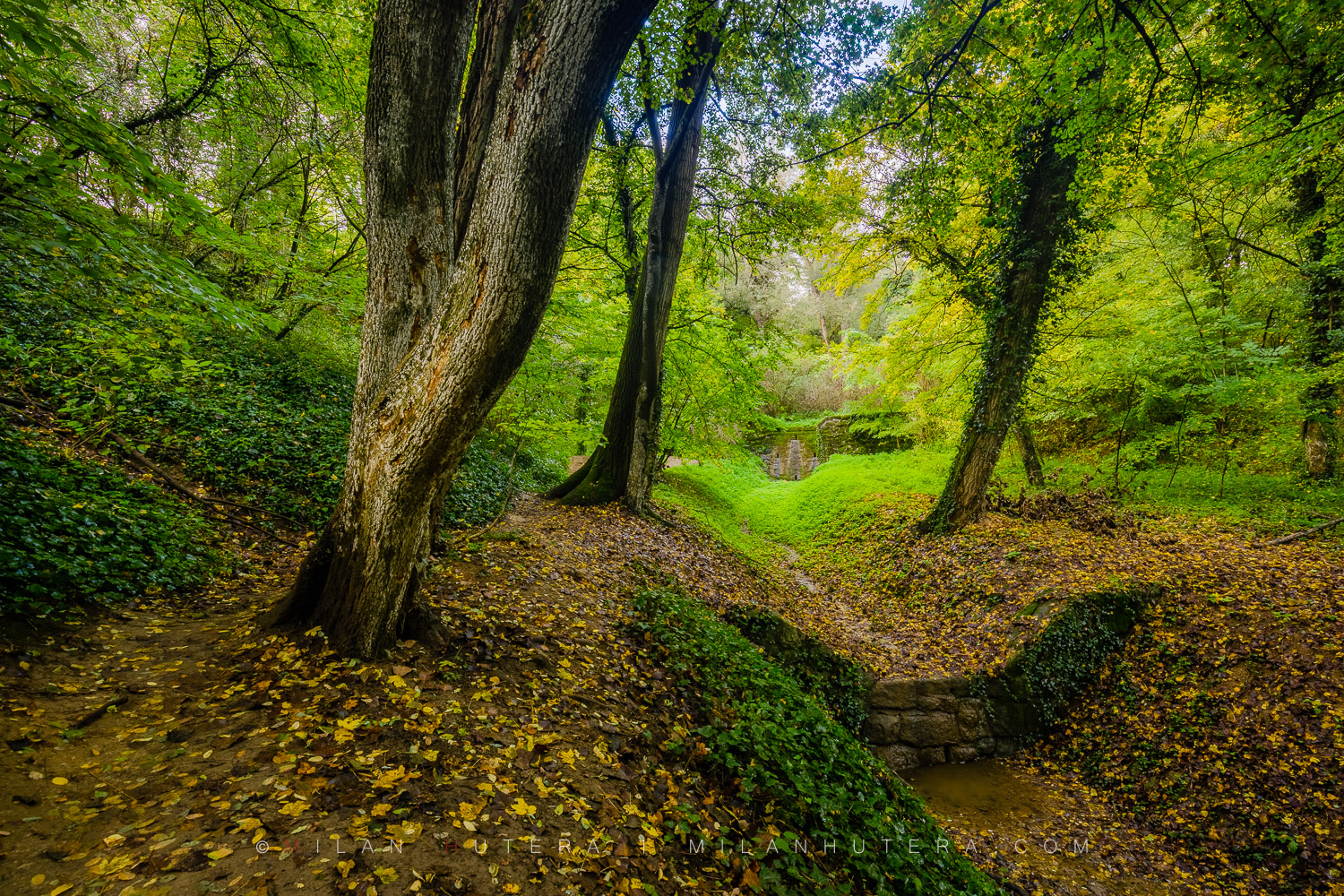
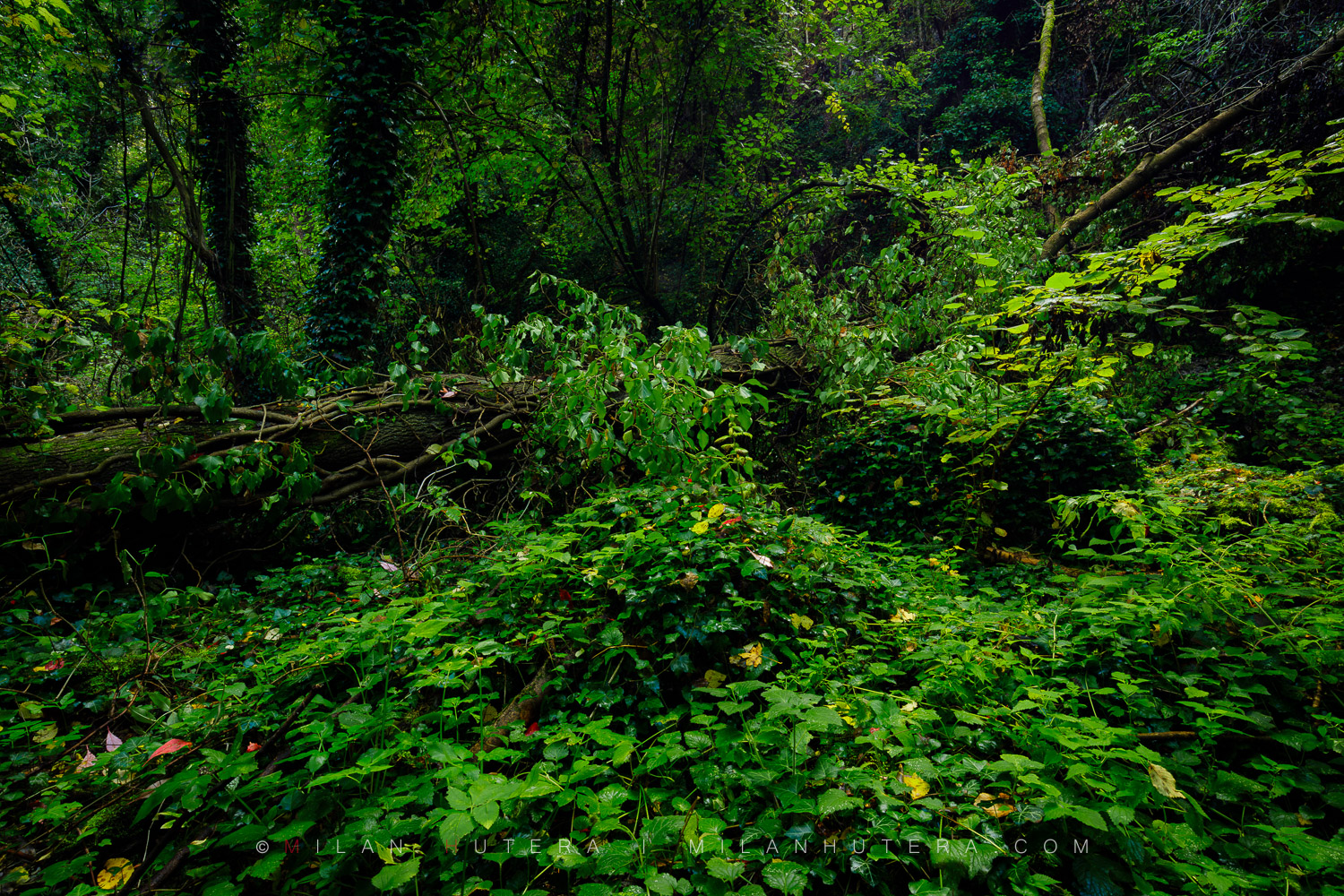
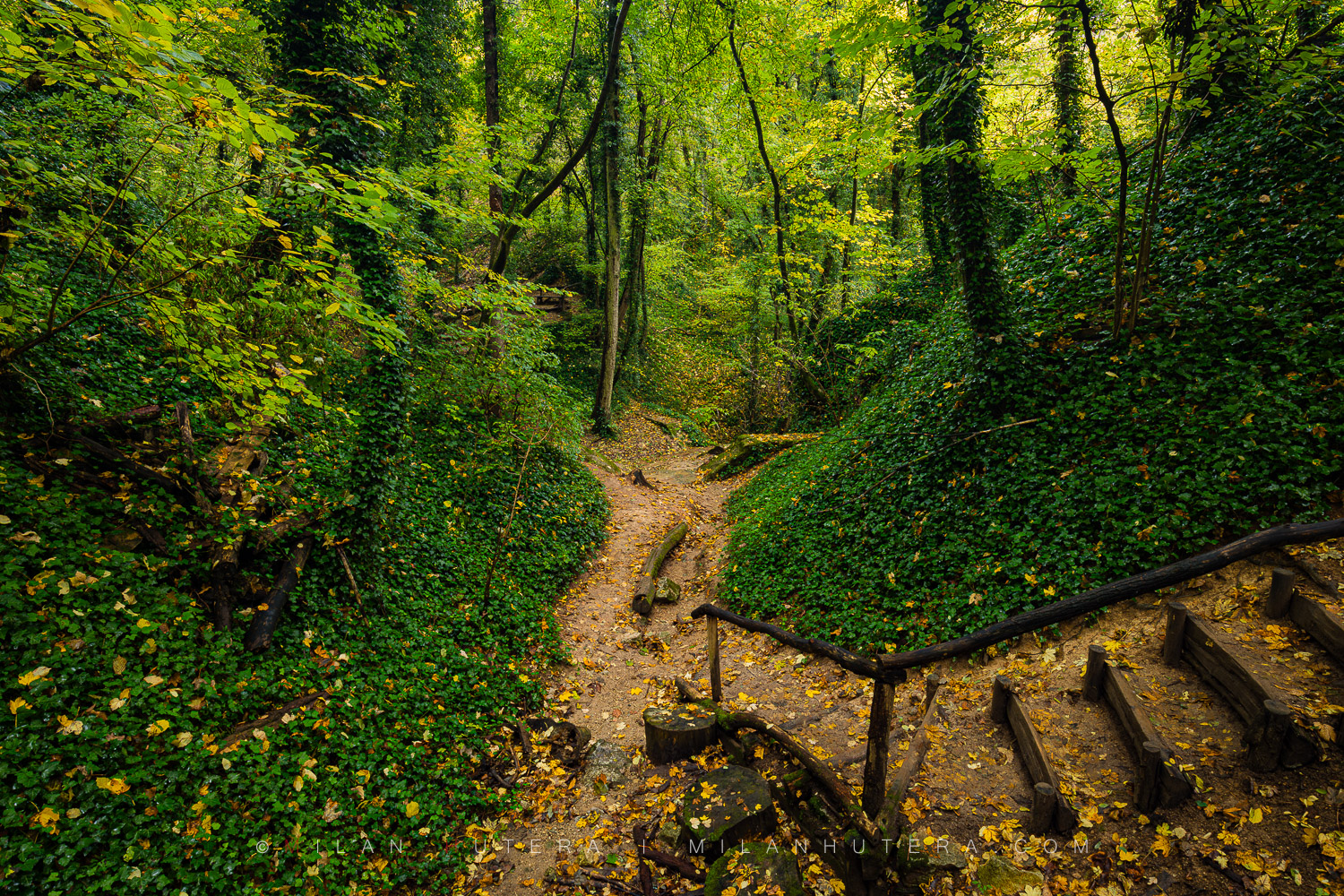
Haluzice Gorge feels more like a fragment of temperate rainforest than a small ravine hidden in western Slovakia. Dense undergrowth, ivy-covered trees, fallen trunks and layers of deep green vegetation create an unusually wild atmosphere only a short distance from the village of Haluzice.
I photographed this small series in late October 2023. Instead of concentrating only on the better-known entrance and its steps, I wanted to show different parts of the gorge itself. Some sections are relatively open and easy to walk through, while others become almost completely enclosed by vegetation and fallen trees. The deeper you enter, the easier it is to forget how close you still are to the surrounding villages and cultivated landscape.
The gorge was created by the erosive force of the Haluzice Stream. Over time, the water cut progressively deeper into the unstable geological layers and formed a ravine approximately one kilometre long, with walls reaching around 50 metres in height. The erosion became so severe that it once threatened nearby buildings and even the historic Romanesque church above the gorge.
During the 20th century, engineers and foresters tried to slow this process by building stone barriers and steps, stabilising the stream and planting trees on the slopes. These interventions helped control erosion and also contributed to the dense vegetation that now gives the gorge its distinctive appearance. Haluzice Gorge became a protected natural monument in 1963 and today has the fourth level of nature protection.
These photographs also document the gorge at a particular moment in time. I made them before a later natural calamity swept through the area and changed parts of its vegetation and appearance. In a landscape that is constantly shaped by erosion, water and falling trees, even a familiar path can look very different after only a few years.
Copyright Milan Hutera, 2023. All Rights Reserved.
 Kapitulská Street Blue Hour, Bratislava, Slovakia27/09/2026 - 19:10
 St. George Fountain, Primate’s Palace, Bratislava, Slovakia27/09/2026 - 18:55
 Trogir Twilight Panorama, Croatia12/09/2026 - 11:29
 Primošten Scenic View Panorama, Croatia11/09/2026 - 10:50
 Diocletian’s Palace Cellars, Split, Croatia11/09/2026 - 06:40
 St. James Cathedral Twilight, Šibenik, Croatia10/09/2026 - 19:45
 Šibenik Old Town Street at Night, Croatia10/09/2026 - 19:25
 St. James Cathedral Ceiling, Šibenik, Croatia10/09/2026 - 16:50
 St. James Cathedral Steps, Šibenik, Croatia10/09/2026 - 16:10